01Primary screening
Nephron and collecting duct organoids
 Nephron organoid
 Collecting duct organoid

- High-throughput compound screening
- Fit-for-purpose nephron or collecting duct models

Engineered for predictive drug discovery
Closing the gap between preclinical discovery and human clinical success in kidney disease.
We build structurally defined, human-relevant kidney organoid platforms that help partners de-risk drug programs — and power our own pipeline of kidney therapeutics.
Kidney diseases affect hundreds of millions of people, yet drug development remains limited by the lack of predictive human models.
Animal models and conventional cell cultures often miss human-specific kidney biology. More than 90% of drugs that clear animal studies never reach approval, frequently because of safety or efficacy problems that only appear in people — including kidney toxicity.
The field needs scalable, human-relevant platforms that capture kidney structure and function.
The FDA’s 2025 roadmap to reduce animal testing is accelerating the shift to human-relevant New Approach Methodologies, including organoids. DeepNephro is built for this transition.
One source of expandable human kidney progenitors, configured into three modules — so each question is answered at the right balance of throughput and physiological fidelity.
 hiPSCsHuman induced pluripotent stem cells
 iNPCsNephron progenitors
 iUPCsUreteric progenitorsNephron organoidCollecting duct organoid
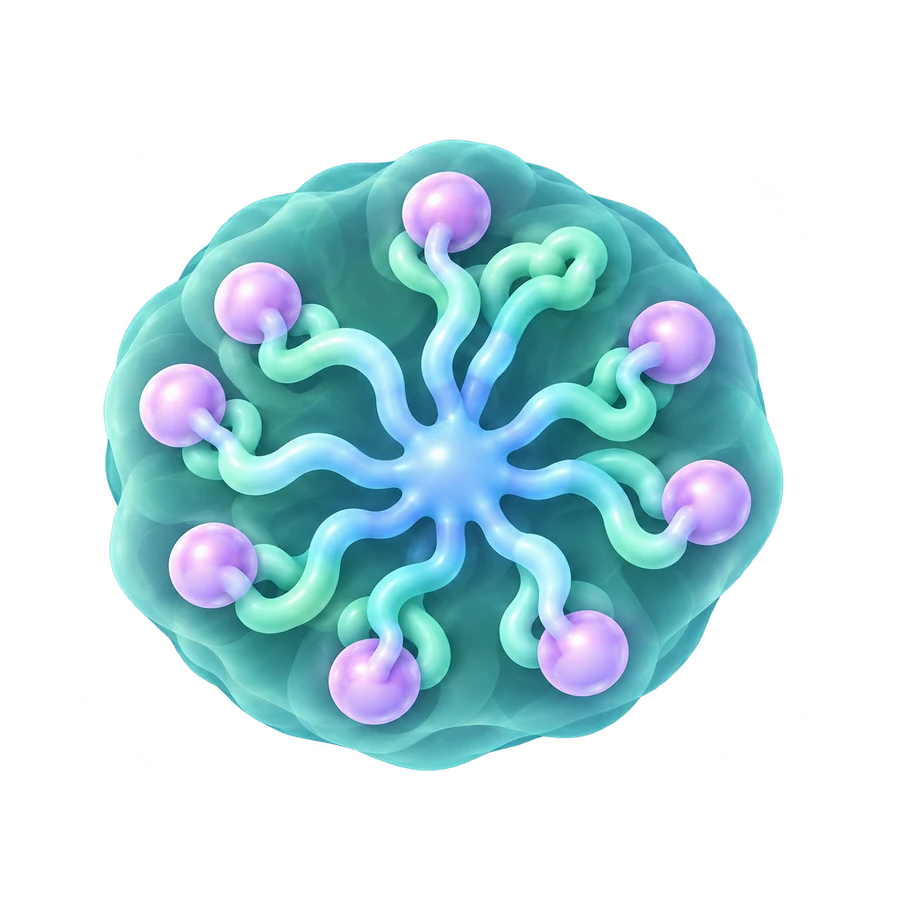
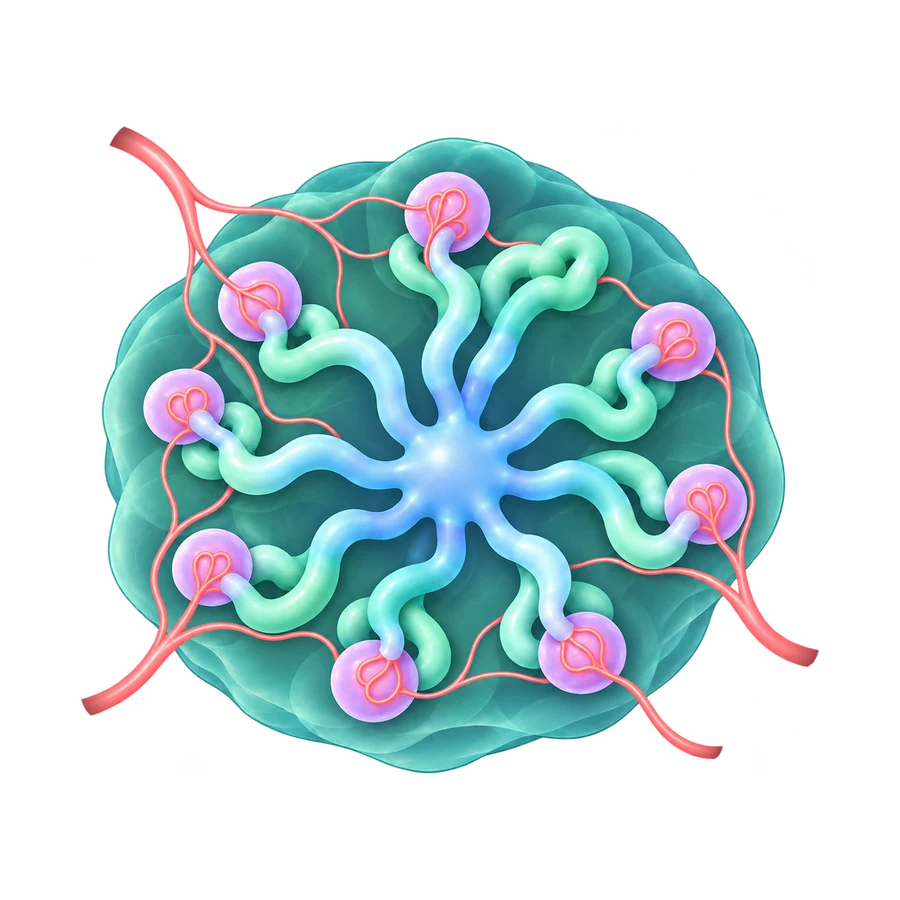
Built to recapitulate the structure, function, and disease biology of the human kidney.
Reproducible nephron and collecting duct compartments, including glomeruli with Bowman’s space, organized in human-relevant 3D structure.
Demonstrated glomerular filtration, tubular albumin reabsorption, and renin-producing endocrine activity — function, not just structure.
Improved representation of the diverse, mature epithelial cell types found in the human kidney.
Built from expandable nephron and ureteric progenitors — modular, reproducible, and compatible with screening workflows.
Disease-relevant phenotypes with reproducible, assay-ready readouts, enabling faithful modeling of kidney diseases such as PKD.
Each application draws on the modules that fit the question — from fast, broad screening to high-fidelity validation.
Select nephron, collecting duct, or assembloid models based on disease biology and the target compartment — including high-fidelity polycystic kidney disease.
High-throughput organoid screening and hit prioritization, followed by in vitro and in vivo assembloid validation.
Evaluate preclinical candidates directly in transplanted kidney assembloids for high-fidelity nephrotoxicity assessment.
We apply our platform to our own kidney therapeutics programs, starting with ADPKD, where our human organoid screens surfaced a novel target.
All programs are preclinical.
Our platform builds on research published in leading journals, demonstrating advanced kidney organoid systems and disease modeling.
DeepNephro is led by a team with expertise in kidney biology, stem cell engineering, and translational development, guided by leading authorities in nephrology and drug development.
“Best Science Images of 2025”
DeepNephro’s human kidney assembloid was selected by Nature as one of its Best Science Images of 2025.
Read on Nature Science, 2025“Most authentic kidney replicas so far”
Science highlighted DeepNephro’s kidney assembloid as the “most authentic kidney replicas so far.”
Read on ScienceInterested in the platform, a partnership, or learning more? We’d like to hear from you.
info@deepnephro.com